Today opens with the discussion of the generations of Noah and his sons: Shem, Ham. and Japheth. Out of these generations spread. Scripture starts with the generations from Japheth who settled along the Mediterranean coast, spreading out each with their own language and clan. The cause of this will be discussed more when we discuss the Tower of Babel.
Next came the generations from Ham. The most notable is Nimrod who scripture says was the first mighty man and a mighty hunter before the Lord. (Genesis 10:8-9). This was likely an aggressive man who ran counter to God. He founded the cities of Babel and Ninevah. Also noteworthy are the generations of Canaan from whom came the Canaanites. They included the cities of Sodom and Gomorrah (Genesis 10:19, 19:4-8). This provides a potential link between the actions of Ham (Genesis 9-22) and the people of Sodom. The most notable is Peleg which scripture notes “for in his days the Earth was divided” (Genesis 10;25). This could possibly be in reference to the Tower of Babel which we come to next in Genesis 11.
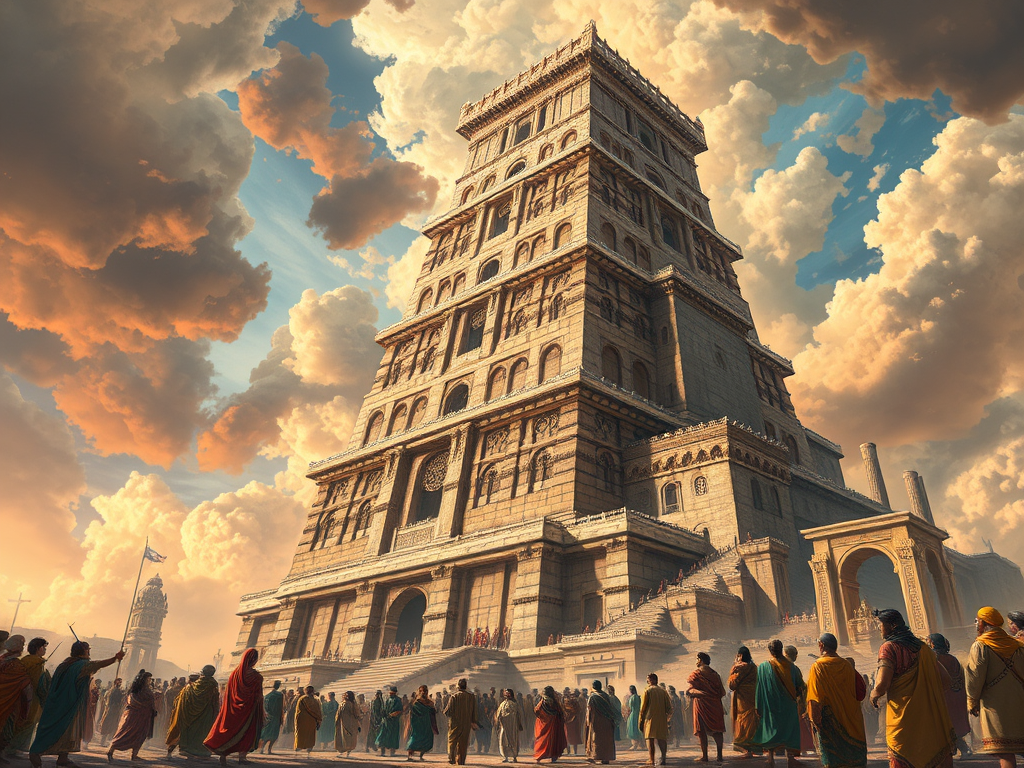
The Tower of Babel starts as a rebellion against God. The men said ““Come,” they said, “let us build for ourselves a city with a tower that reaches to the heavens, that we may make a name for ourselves and not be scattered over the face of all the earth.” (Genesis 11:4). This was evidence that men had become increasingly proud of the work they could do as a community, and less reliant on God. God’s response to this is interesting. “And the LORD said, “If they have begun to do this as one people speaking the same language, then nothing they devise will be beyond them.” (Genesis 11:6). What did He mean when He said that “nothing they devise will be beyond them”? God’s concern is always our righteousness. What the men were undertaking was not righteous. They sought accomplishments, pride, and to be totally independent. By accomplishing the building of the Tower some commentaries say that God was seeing the wickedness behind building the Tower and if man remained united would become capable of many more egregious and evil acts. I can understand that reasoning. As we have become united as a people through technology today, how much evil have we seen perpetrated?
God decided to intervene and stop men from accomplishing their goals in relation to the Tower. But He showed mercy. He could have destroyed the city at that point. He would have been just in doing that. Instead to again show man that He is sovereign in power, He gave each their own language and disperse them throughout the Earth (Genesis 11:8-9).
Chapter 11 ends talking again about Shem’s descendants, ending with Terah, the father of Abram (whom we now know as Abraham), Nahor, and Haran. The final passages (verses 10-32) also demonstrate the beginning of the promise made in Genesis 6:3 “So the LORD said, “My Spirit will not contend with man forever, for he is mortal; his days shall be 120 years.” Shem lived 500 years, which was a significant reduction from the of the descendants of Adam in Genesis 5. Even his father Noah lived 950 years (Genesis 9:28). And in chapter 11 we see this continual reduction where Terah lived for 205 years. Gradually God is keeping the promise He had made.
 My Bible Journey In A Year (Chronological)