Chapter 17 starts with God changing Abram’s name to Abraham because he will be the father to a multitude of nations. As such, God makes a covenant between Himself, Abraham, and Abraham’s offspring. Based on the covenant, God would be the God of Abraham and God of his offspring, and God would give the land of Canaan. (Genesis 17:7-8) God only asks that Abraham and his offspring keep the covenant throughout the generations. For their part of the covenant God first asks that every male among Abraham’s household be circumcised. Furthermore, every male born to the household for all generations will be circumcised when they are 8 days old, as well as every male foreigner and male servant under them will be circumcised. Any male who is uncircumcised, would be cut off from the household. (Genesis 17:10-14) This covenant prepares for what comes next.
God then tells Abraham that Sarai from then on would be known as Sarah (which means princess). The Lord promises to provide a son to Abraham through Sarah, and the Lord would bless her to become nations and kings of peoples would come from her (Genesis 17:15-16). The reaction from Abraham was natural. At the beginning of chapter 17, we are told that Abraham was already 99 years old. Unlike before Noah when men lived hundreds of years. Abraham is likely already feeling the effects of his age. He even asks that Ishmael the blessing from God. God re-affirms that Sarah would bear the son promised to Abraham and adds that his name will be Isaac (meaning he laughs) and it is through Isaac and his offspring that God made the covenant with Abraham. But God promised to also bless Ishmael. Ismael would be the father to twelve princes, and Ishmael would be a father to a great nation (Genesis 17:18-21). After this encounter Abraham took Ismael, and with every male in Abraham’s household they were circumcised.
Chapter 18, we again see God encountering Abraham. Three men appear to Abraham, and he runs to greet them. In his greeting Abrham says, “O lord, if I have found favor in your sight do not pass by your servant” (Genesis 18:3). This is significant. The Hebrew word for Lord used is Adonay, which indicates God. The term ford for respect in Hebrew is adoni. The difference in spelling indicates that Abraham recognized one of the visitors as a divine manifestation of God (ESV footnotes). This makes sense based on his reaction at his age. He ran to greet them, calling himself their servant. He had them sit at the foot of the tree while he ran to his house to have a meal prepared for the three men.
While the three men are eating as Abrham watched, they asked where Sarah was. Abraham told them she was in the tent and the Lord (again confirming the divine manifestation of God) affirmed that Sarah would have a son when He returned about the same time the next year. Sarah meanwhile was listening, and hearing that she would have a son caused Sarah to laugh in disbelief as Abraham had done. This caused the Lord to ask if anything was impossible for Him? At which time the Lord affirms what He would do. Sarah tries to deny that she laughed, but the Lord tells her she did (Genesis 18:9-15). I found how remarkably alike we are to Abraham and Sarah. There are times I feel that God could not intervene now. Like Abraham, I am getting older. The knees do not work as well as they once did. I doubt I could run life the passage says Abraham did. If God promised anything like he did with Abrham, I would laugh with doubt. Yet God can do anything with these old bones that is within His will. So why do I doubt what He would do with me? I should live as though the Lord is using me in everything I do, because He probably is preparing something.
The next section finds Abraham setting off with the three men when they look towards Sodom. There appears to be discussion about whether the Lord should tell Abaraham the destiny for Sodom. This may be for the benefit of Abraham to include him in the righteous judgement of God. That is because the Lord discloses to Abraham of the great sin in Sodom and Gomorrah which has led God to go and see if the sin is as bad as the outcry (Genesis 18:16-21). This shows that God judges based on the evidence of our sin. It is not arbitrary. Did God need to go to Sodom and Gomorrah? No. He already had evidence. So why did He send angels to go there? I believe it was a test for Abraham and Lot.
The reason this belief is looking at Abraham’s intercession for Sodom. Abraham seemed to bargain with the Lord starting at 50 righteous people and coming down to 10 righteous people asking the Lord to spare Sodom, and each time the Lord said He would spare Sodom, even if there were only 10 righteous people found (Genesis 18:22-33).
Chapter 19 tells us of the fate of Sodom and Gomorrah. Lot, like Abraham rose and greeted the two angels that went to Sodom bowing down to them. He too offered them comfort in his home as part of that greeting. They indicated that they intended to go to the town square, but Lot persisted, so they went and he had a meal prepared for them. As they were about to lay down, scripture tells us a crowd of men, young and old down to the last man surrounded the house demanding the two men be brought out. The words being used for why is “to know them”. Being that Lot offered his daughters “who have not known men” reflects the intention was to perform sexual acts on the men. The crowd quickly turns on Lot for they saw him as a traveler now here to judge them. This led to a second instance of Lot being rescued, this time by the two angels who pulled Lot into the house and caused all the men to become blind (Genesis 19:1-11).
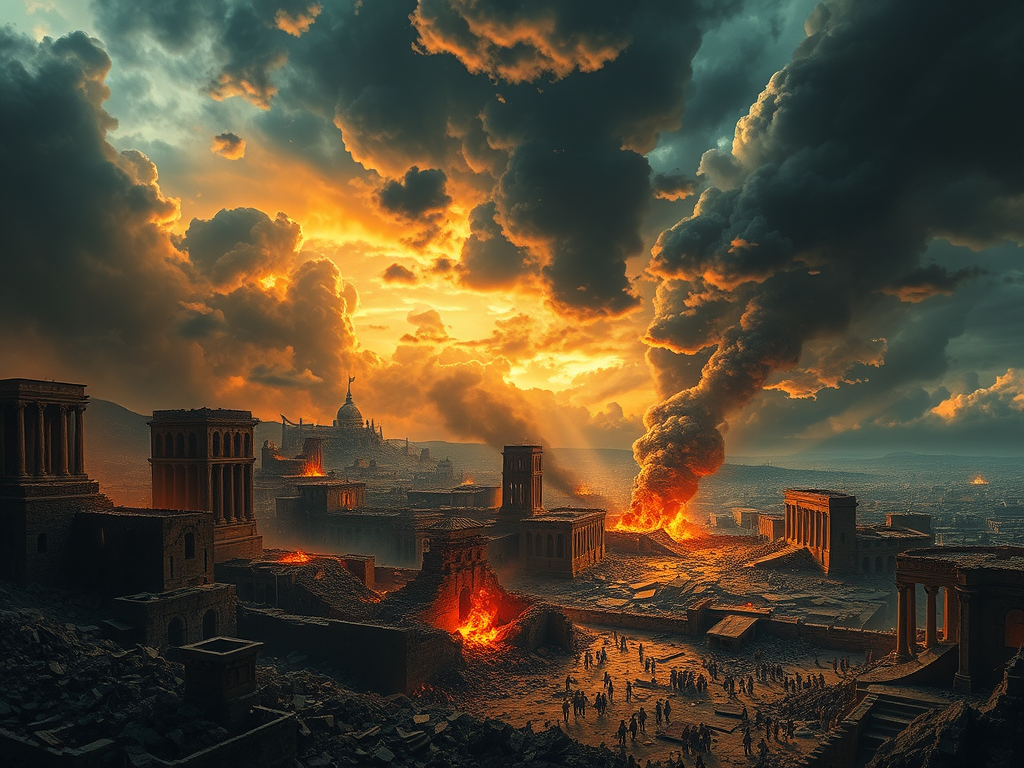
At this point they tell Lot to gather anyone in the household and leave the city of Sodom as they will be destroying it. Lot went to his future sons-in-law to urge them, as well as his wife and two daughters, but the future sons-in-law thought he was joking. It was only Lot, his wife, and his daughters who left the city the next morning. The last urging of the angels was to not look back. At Lot’s urging the angels relented and instead of fleeing to the hills, they fled to Zoar which was the nearest city. The angels said nothing would happen until they arrived at Zoar. God rained down sulfur and fire when they arrived at Zoar. but as they came to Zoar, where they would be safe, Lot’s wife who was running behind looked back and became a pillar of salt (Genesis 19:15-26).
This is a tragic story of sin and judgement indeed. First, is the only sin the sexual immorality that was obviously pervasive in Sodom as well as Gomorrah. Per Ezekial 16:49 it would not seem so. That states ““Now this was the sin of your sister Sodom: She and her daughters were arrogant, overfed and unconcerned; they did not help the poor and needy.” Sexual immorality was a large part of the sin of the entire Valley of Siddim, but arrogance, gluttony, and indifference to the needs of others were also symptoms of the sins of Sodom and Gomorrah. Does this seem familiar today? I view this as a serious warning for our generation.
Another question i have heard is whether this is real. Recent discoveries at the ancient city of Tall El-Hammam may provide the answers. This was a city that in the bronze age was flourishing and suddenly stopped. In fact, the entire valley is described as an uninhabitable wasteland for 700 years until it began flourishing again (Archaeologists Claim to have Discovered the Location of the Biblical City of Sodom | Ancient Origins). This matches the scriptural descriptions of what happened to Sodom.
Lot and his daughters later fled Zoar and fled to the hills. They reside in an isolated location, and the daughters fear now after the death of their soon to be husbands, they now would not find husbands by which to have children. Each daughter got their father drunk, and slept with him, the elder first and then the younger. The elder bore a son named Moab who was father to the Moabites, and the younger bore a son name Ben-ammi who is father to the Ammonites (Genesis 19-30-38).
 My Bible Journey In A Year (Chronological)