Two years after the cupbearer is restored to his role with the Pharoah, the Pharoah is troubled by a dream. In the dream, there were seven plump cows eating and drinking by the Nile. Seven lean cows came up later and ate the seven plump cows. Then he had a second dream where there were seven ears of grain that were plump and good, and they were swallowed by seven thin ears of grain. Pharoah summoned the magicians of Egypt, but none could tell him what the dreams meant.
The cupbearer, however, now remembered his dreams and Joseph’s interpretations of the dreams. As a result, Pharoah sent for Joseph in hope that Jospeh would be able to interpret his dreams. In asking if Joseph could interpret dreams, Joseph again gave credit to God for any interpretation that he would be able to give Pharoah. Pharoah then proceeded to describe his dreams to Joseph.
Joseph tells Pharoah that God revealed to Pharoah there would be seven years of plenty in the land of Egypt, followed by seven years of famine where all the years of plenty would be forgotten because it will be so severe. The fact that Pharoah had two similar dreams meant that God intended for this to happen shortly. Based on this Joseph recommended selecting a wiseman to put over the land of Egypt, as well as appoint overseers to take one-fifth of the produce in the land of Egypt during the years of plenty and store it as a reserve during the time of famine (Genesis 41.
Pharoah asks where they can find a man who has the Spirit of God, to be the wiseman that Joseph recommended. Then he appoints Joseph to the role as he was able to interpret the dreams. It was clear to Pharoah that Joseph was empowered through God and able to divine what even the finest magicians in Egypt could not.
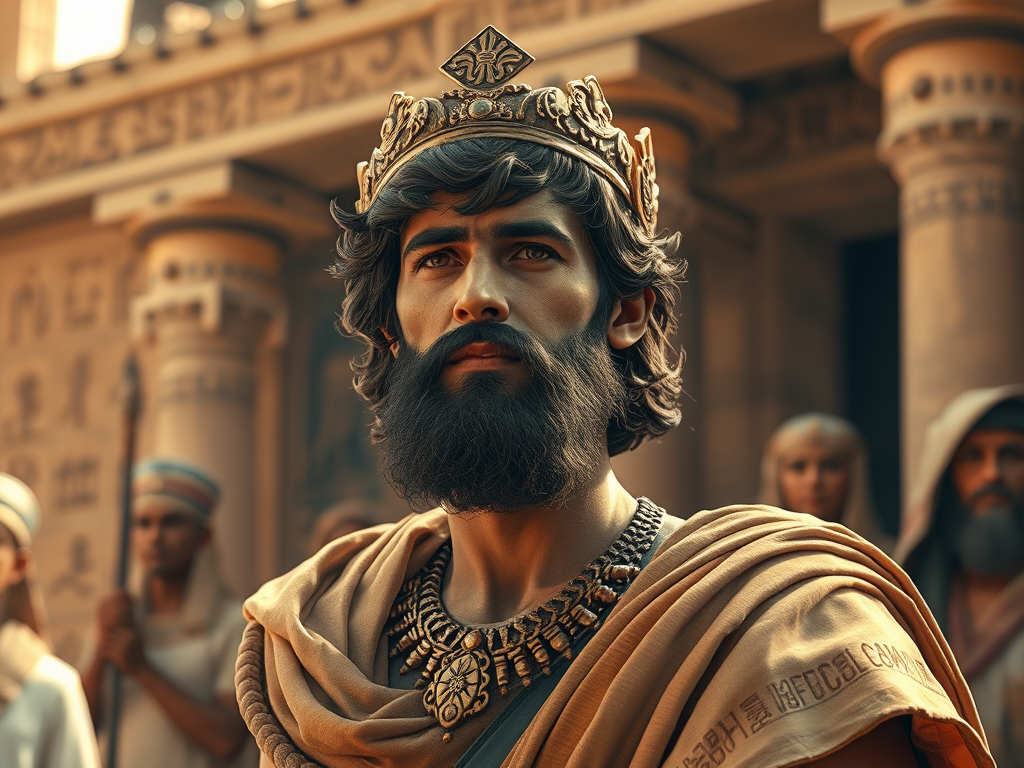
Pharoah gave Joseph his signet ring, fine linens, and a gold chain for wearing around his neck. And he had Joseph ride in his second chariot and set Joseph over all of Egypt. Joseph is then re-named Zaphenath-paneah and gives him Asenath the daughter of Potiphera priest of On as his wife. These add to the acceptance of Joseph in being empowered over Egypt despite being a Hebrew. Joseph was only 30 years-old when this all occurred.
The abundance within Egypt during the plentiful years was described as being like the sands of the sea and eventually was no longer able to be measured it was so great. All of this was stored in the cities of Egypt according to Joseph’s authority. During these years Joseph was also given two sons. The first was Manasseh, “For the Lord has made me forget all my hardship and all my father’s house”. The second was Ephraim, “For the Lord has made me fruitful in the land of my affliction”.
When the time of famine came, it was hard and the people of Egypt cried out. Pharoah told them to go to Joseph and do whatever he says. Scripture points out that all the Earth turned to Egypt the famine was so severe. It was likely limited to the Mesopotamian region, but for all intents and purposes it must have felt like all the Earth because it was so vast. And the entire region turned to Joseph for assistance and to buy grain (Genesis 42).
Jacob and his family are greatly affected by the famine themselves, and Jacob tells his sons to go to Egypt to buy some grain. The one son that did not go was Benjamin, because Jacob feared anything happening to him. Remember the love of Jacob for Rachel, and as far as he knows this is the last of the children she bore for him. By this time, Joseph was appointed as governor over Egypt, so to buy the grain the brothers reported and bowed to Joseph but did not recognize him, even though he recognized them.
Joseph remembered the dreams of his youth and accuses his brothers of being spies in the land of Egypt which they deny. They state they are Joseph’s servants and reaffirm that they are in Egypt to buy grain for their people. They add that they have one brother that remained with their father and one who was no longer with them. Joseph tells them he will give them the grain, but one brother must stay behind and the others can return. However, they must return to Egypt with the missing brother to affirm their claims. This distressed the brothers as they felt this was punishment for what they did to Joseph. While they discussed this, they did not know Joseph understood what they were saying as an interpreter was there. The discussion led Joseph to leave the brothers and weep.
When Joseph returned, he took and bound Simeon before the other brothers. Then he ordered his men to fill bags with grain and return all the money in the sacks of grain as well. On the way home, the brothers discover the money that was returned. This discovery led to the brothers and Jacob to fear returning with Benjamin, even when Rueben declared that his sons could be killed if he did not return with Benjamin after returning to Egypt.
Judah eventually persuades Jacob to allow the brothers to return to Egypt. Jacob sends them with gifts as well as double the money for the grain, in case the first time was an oversight. When they arrived with Benjamin, Joseph had an animal slaughtered and the brothers brought to his house. They were afraid because they thought it was due to the money in with the grain.
When Joseph came home, the brothers were there. He asked about their father, and then saw Benjamin, causing him to leave a weep again. He then served the food to his brothers, with the brothers separated from him because Egyptians did not eat with Hebrews. Each brother was seated according to their birthright, leading to astonishment among the brothers. And Benjamin was given a portion of food five times the size of the other brothers (Genesis 43).
 My Bible Journey In A Year (Chronological)